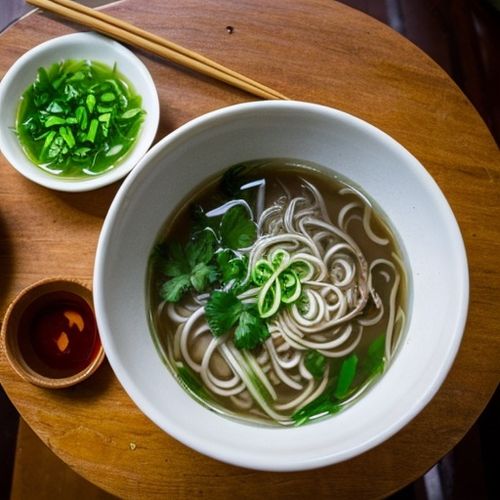
Before dawn breaks over Hanoi's Old Quarter, a sacred ritual unfolds in steamy kitchen backrooms—the careful tending of massive pots where beef bones and spices undergo their slow metamorphosis into phở broth. This isn't mere soup-making; it's a culinary séance where patience and precision coax out flavors that define Vietnam's national dish.
The difference between good phở and transcendent phở lies in those silent overnight hours when marrow, cinnamon, and star anise commune in bubbling liquid, their essences merging into something greater than the sum of their parts. More than just a noodle soup, a properly crafted bowl of phở represents the Vietnamese philosophy of ăn ngon—eating well as an act of cultural pride and personal joy.
The Bone Selection: Foundation of Flavor
Not all bones are created equal in phở alchemy. Master broth makers seek specific cuts—knuckle bones for their cartilage-rich collagen, marrow bones for unctuous fat, and occasional oxtails for meaty depth—each contributing distinct textures and nutrients to the brew. The bones are meticulously cleaned, often soaked in cold water and vinegar to purge impurities, then blanched to remove any residual blood that could cloud the broth. This preparatory rigor ensures the final liquid emerges as clear as amber, its purity a visual promise of the clean, robust flavors to come.
The Spice Symphony: Aromatic Mathematics
The phở spice blend reads like an ancient herbalist's prescription: star anise for licorice-like sweetness, cinnamon sticks for woody warmth, black cardamom for smoky depth, cloves for piercing aroma, and coriander seeds for citrusy brightness. These aren't merely dumped into the pot but toasted whole to awaken dormant oils, then bundled in muslin for controlled infusion. The exact ratios remain closely guarded secrets, varying by region and family tradition—Hanoi versions lean heavier on cinnamon, while Saigon styles might emphasize star anise. What unites them is the understanding that spices should whisper, not shout; their role is to complement the beef's natural savor, not mask it.
The Fire Dance: Temperature as Conductor
The broth's 12-hour journey follows a carefully choreographed thermal ballet. A rolling boil for the first hour extracts maximum protein and flavor, then the heat reduces to a gentle simmer—vigorous enough to continue extraction but calm enough to prevent emulsification of fats that would make the broth greasy. The surface is skimmed religiously, removing impurities while leaving the precious marrow fats intact. This sustained thermal massage coaxes out gelatin from connective tissues, transforming water into silky, mouth-coating nectar. Modern kitchens might use specialized stock pots, but traditionalists swear by the even heat distribution of aged clay vessels.
The Onion Char: Flavor Through Fire
A defining step occurs not in the pot but over open flames—ginger and onions are blackened until their skins carbonize, then rinsed to remove bitter ash. This Maillard-rich preparation adds a subtle smokiness that elevates the broth from merely savory to profoundly complex. The charred alliums join the simmering cauldron, their caramelized sugars balancing the spices' sharpness while contributing umami depth. This technique, borrowed from French onion soup methods during colonial times, exemplifies Vietnam's genius for adapting foreign influences into something distinctly its own.
The Fish Sauce Paradox: Umami's Secret Weapon
While the bones work their magic, another quintessentially Vietnamese ingredient waits in the wings—nước mắm, the amber fish sauce that will be added by the tablespoon just before serving. This seems counterintuitive (fish sauce in beef soup?), but the fermentation-born glutamate works synergistically with the beef's natural savoriness, amplifying umami without leaving a fishy trace. The timing is crucial—added too early, it turns bitter; added at the perfect moment, it makes flavors bloom like morning glory flowers at sunrise.
The Noodle Interlude: Rice Ribbons' Righteousness
While the broth simmers, attention turns to the bánh phở—flat rice noodles that must achieve textural perfection. Made from stone-ground rice soaked in mineral-rich water, the noodles are briefly blanched to order—overcooked, they turn mushy; underdone, they remain chalky. When done right, they provide the ideal canvas: sturdy enough to hold up to hot broth yet delicate enough to let the liquid's nuances shine. The best phở kitchens make their noodles fresh daily, their subtle chew and faint rice sweetness completing the symphony.
The Assembly: Precision in Simplicity
At service time, the 12-hour broth meets its supporting cast in a dance of minimalist perfection. Thinly sliced raw beef (often ribeye or brisket) gets gently cooked by the broth's heat, preserving rosy tenderness. Herbs like Thai basil and sawtooth coriander add bright contrast, while bird's eye chilies and lime wedges allow diners to customize heat and acidity. The broth is strained meticulously—any stray bone fragments or spice particles would betray the kitchen's care—and served scalding hot, its vapors carrying the promise of deep, layered flavors.
Regional Variations: North vs South
While the broth's fundamentals remain constant, regional differences emerge like dialects of the same language. Hanoi's phở Bắc features clearer, more austere broth with wider noodles and minimal garnishes, reflecting northern restraint. Saigon's phở Nam tends sweeter (sometimes with rock sugar added), served with bean sprouts and a forest of herbs, embodying the south's lush abundance. Both styles share the same soul—that painstakingly extracted bone essence—but express it through different culinary vocabularies.
Global Adaptations and Enduring Traditions
From Parisian bistros to Brooklyn food trucks, global phở interpretations abound—some adding nontraditional ingredients like foie gras or truffle oil, others catering to dietary trends with vegan "bone" broth made from mushrooms. Yet in Vietnam, the old ways persist: hole-in-wall shops still simmer their cauldrons overnight, and grandmothers measure spices by palmfuls rather than grams. UNESCO's recognition of Vietnamese cuisine as intangible heritage has sparked renewed interest in traditional techniques, ensuring the 12-hour broth ritual survives in an age of instant gratification.
To sip properly crafted phở broth is to taste time itself—the slow surrender of marrow to water, the gradual marriage of spice and meat, the quiet transformation of hardship (this dish originated from French colonial beef surpluses) into national pride. In our era of quick meals and faster consumption, this overnight alchemy stands as delicious rebellion—proof that some perfections cannot be rushed. Whether enjoyed at a Saigon street stall at sunrise or recreated at home with reverence, each steaming bowl offers more than nourishment; it's a masterclass in Vietnamese resilience, a reminder that the best things in life—and in broth—come to those who wait.
By David Anderson/Mar 29, 2025
By Sophia Lewis/Mar 29, 2025
.jfif)
By Emily Johnson/Mar 29, 2025
By Lily Simpson/Mar 29, 2025
By Emily Johnson/Mar 29, 2025
By Natalie Campbell/Mar 29, 2025
By Thomas Roberts/Mar 29, 2025
By Olivia Reed/Mar 29, 2025
By Daniel Scott/Mar 29, 2025
By William Miller/Mar 29, 2025
By George Bailey/Mar 29, 2025
By William Miller/Mar 29, 2025
By Amanda Phillips/Mar 29, 2025
By Christopher Harris/Mar 29, 2025
By Megan Clark/Mar 29, 2025
By Sarah Davis/Mar 29, 2025
By Samuel Cooper/Mar 29, 2025
By Victoria Gonzalez/Mar 29, 2025
By Olivia Reed/Mar 29, 2025