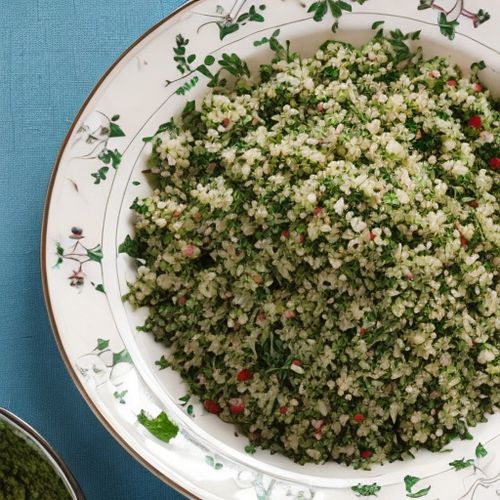
In the sun-drenched kitchens of Beirut and the mountain villages of Mount Lebanon, a vibrant green symphony comes to life—tabbouleh, the iconic salad where parsley isn’t just an ingredient but the star. Far from the bulgur-heavy versions found abroad, authentic Lebanese tabbouleh is a celebration of freshness, a finely chopped herb festival punctuated by jewel-like pomegranate seeds and the occasional grain of wheat.
This isn’t merely a side dish; it’s a cultural touchstone that embodies the Lebanese ethos of mezza—the art of transforming simple ingredients into shared culinary joy. With each bite, the bright acidity of lemon, the earthiness of olive oil, and the peppery burst of herbs transport you to terraced Lebanese gardens where food and tradition grow intertwined.
The Herb Hierarchy: Parsley as Protagonist
At its core, tabbouleh is a parsley salad—not a grain dish. Lebanese grandmothers insist on flat-leaf parsley (never curly) chopped so finely it almost melts on the tongue. The ratio is sacred: at least 70% parsley to 30% other ingredients. This green avalanche gets its depth from mint—preferably spearmint from the garden—added in precise proportion to avoid overpowering. The herbs must be absolutely fresh, their stems crisp enough to snap, their leaves vibrant enough to stain the cutting board green. This verdant foundation turns what could be a simple salad into a chlorophyll-rich revelation.
Bulgur’s Supporting Role: Texture as Counterpoint
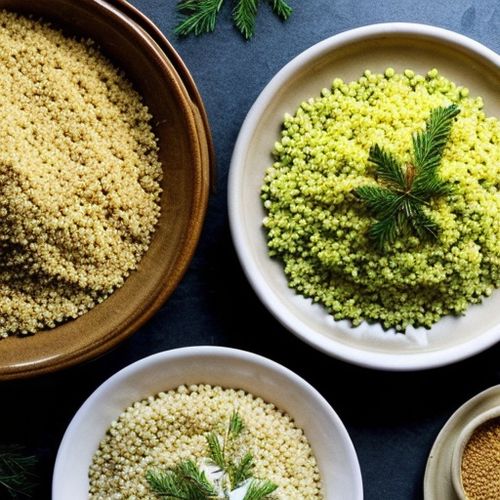
The handful of fine (#1 grade) bulgur wheat serves as textural punctuation rather than bulk. Soaked briefly in lemon juice (never cooked), it plumps just enough to offer gentle chew without losing its nutty character. The grains should appear as occasional golden flecks amidst the green, their presence subtle but essential—like percussion in an orchestra. Traditional recipes might soak the bulgur in tomato juice instead, letting it absorb the fruit’s sweetness before joining the herb medley. This careful calibration ensures the wheat complements rather than competes with the starring herbs.
The Tomato Dilemma: Ripeness Over Quantity
Lebanese tabbouleh treats tomatoes as seasoning rather than main ingredient. Only fully vine-ripened, firm tomatoes make the cut—their seeds and gel removed to prevent sogginess, their flesh diced into tiny cubes that disperse like confetti. The tomato’s role is twofold: provide juicy bursts of umami and help bind the olive oil and lemon into a cohesive dressing. Some mountain villages skip tomatoes entirely in winter, proving the salad’s adaptability while maintaining its herbaceous soul.
The Citrus-Alchemy: Dressing as Brightener
The dressing—a simple yet profound emulsion of freshly squeezed lemon juice and extra virgin olive oil—follows the Lebanese principle of hamod (perfect sour balance). The lemon must be sour enough to make your lips pucker slightly, its acidity cutting through the herbs’ chlorophyll richness. Olive oil, preferably from family groves in the south, adds fruity depth and carries the flavors. The two are whisked together with a pinch of salt until barely emulsified, then tossed with the greens at the last moment to preserve their crispness. This isn’t dressing as afterthought; it’s the lightning bolt that brings the entire dish to life.
The Onion Protocol: Sharpness Controlled
Raw onion could dominate tabbouleh if not handled with care. Lebanese recipes call for scallions or spring onions—their green tops included for color—soaked briefly in ice water to tame their bite. Some versions use shallots or even omit onions entirely for a purer herb experience. When included, they’re minced to near-invisibility, distributing their pungency evenly without overwhelming individual bites. This nuanced approach to alliums demonstrates the dish’s refined balancing act.
Regional Variations: From Coast to Mountain
Tabbouleh morphs subtly across Lebanon’s microclimates. Coastal versions might include a whisper of sumac for extra tartness, while Bekaa Valley cooks add purslane for lemony crunch. In the north, pomegranate molasses sometimes replaces lemon for deeper fruitiness, and southern recipes may feature wild za’atar leaves among the herbs. These regional fingerprints don’t dilute tabbouleh’s identity but rather celebrate Lebanon’s diverse terroir within a shared culinary language.
The Chop Ritual: Knife Skills as Heritage
Authentic tabbouleh demands hand-chopping—a labor of love where knives (never food processors) transform herbs into emerald confetti. The rhythmic tap-tap-tap of the mezzaluna blade against wooden boards is the soundtrack of Lebanese kitchens before feasts. This manual process bruises the herbs just enough to release their essential oils while maintaining structural integrity. Grandmothers judge a cook’s skill by the fineness of the chop—the ideal texture should cling to a spoon without clumping, each fleck distinct yet harmonious.
Beyond Salad: Tabbouleh as Cultural Touchstone
In Lebanon, tabbouleh transcends its role as mere dish. It’s the centerpiece of Sunday family lunches, the must-have at weddings, and the edible proof of a host’s generosity. Wrapping a spoonful in lettuce or vine leaves turns it into finger food, while stuffing it into pita with grilled meats creates an iconic street snack. Its presence on the table—bright green against white porcelain—signals celebration, its absence at gatherings unthinkable. This cultural weight explains why UNESCO recognized Lebanese cuisine (with tabbouleh as flagship) as intangible cultural heritage.
Modern Interpretations: Tradition Meets Innovation
Contemporary Lebanese chefs play with tabbouleh’s formula while respecting its essence. Fine-dining versions might present it as a molded tower garnished with edible flowers, or deconstruct it into herb sorbet with crispy bulgur. Health-conscious adaptations use quinoa instead of wheat, while vegan restaurants highlight its plant-based purity. Yet the soul remains unchanged—even the most avant-garde chefs agree: when the herbs are perfect, innovation should amplify rather than obscure their glory.
To eat proper tabbouleh is to understand Lebanon’s culinary heart—where scarcity breeds creativity, and simplicity becomes art. That first forkful, bursting with herbal freshness and citrus sparkle, explains why this salad has survived wars and diaspora to remain a national symbol. In a world of overwrought dishes, tabbouleh stands as testament to the power of restraint—proof that when you let quality ingredients shine, they tell stories more vivid than any sauce or spice. Whether enjoyed under Beirut’s jasmine-scented balconies or recreated abroad with care, each green bite offers more than nutrition; it’s a taste of Lebanese identity, one perfectly chopped leaf at a time.
By David Anderson/Mar 29, 2025
By Sophia Lewis/Mar 29, 2025
.jfif)
By Emily Johnson/Mar 29, 2025
By Lily Simpson/Mar 29, 2025
By Emily Johnson/Mar 29, 2025

By Natalie Campbell/Mar 29, 2025
By Thomas Roberts/Mar 29, 2025
By Olivia Reed/Mar 29, 2025
By Daniel Scott/Mar 29, 2025
By William Miller/Mar 29, 2025
By George Bailey/Mar 29, 2025
By William Miller/Mar 29, 2025
By Amanda Phillips/Mar 29, 2025
By Christopher Harris/Mar 29, 2025
By Megan Clark/Mar 29, 2025
By Sarah Davis/Mar 29, 2025
By Samuel Cooper/Mar 29, 2025
By Victoria Gonzalez/Mar 29, 2025
By Olivia Reed/Mar 29, 2025