In the annals of art history, few relationships have been as profound and supportive as that between Vincent van Gogh and Joseph Roulin. At the most turbulent time of his life, Van Gogh found solace and stability in the friendship of Roulin, a postman in Arles. This unique bond is now being explored in a new exhibition, "Van Gogh: The Roulin Family Portraits," which opens at the Museum of Fine Arts, Boston, on March 30, before moving to the Van Gogh Museum in Amsterdam in October. The exhibition, featuring over 20 paintings by Van Gogh, offers a rare glimpse into the deep friendship that not only sustained the artist but also enriched art history.
A Lifeline in Turbulent Times
On December 23, 1888, the day Van Gogh mutilated his ear and presented the severed portion to a sex worker, it was Joseph Roulin who stepped in. Roulin ensured that Van Gogh received care in a psychiatric hospital, visited him regularly, and wrote to Van Gogh's brother Theo to update him on his condition. Roulin even paid Van Gogh's rent while he was hospitalized and spent the entire day with him upon his discharge two weeks later. "Roulin… has a silent gravity and a tenderness for me as an old soldier might have for a young one," Van Gogh wrote to Theo the following April, describing Roulin as "such a good soul and so wise and so full of feeling."
The Exhibition: A Tribute to a Lasting Bond
The exhibition "Van Gogh: The Roulin Family Portraits" is the first to be devoted to portraits of all five members of the Roulin family. It features not only Van Gogh's works but also pieces by significant influences on the Dutch artist, including 17th-century Dutch masters Rembrandt and Frans Hals, and the French artist Paul Gauguin, who lived with Van Gogh in Arles for two months. Co-curator Katie Hanson of the MFA Boston emphasizes the human story behind the exhibition: "So much of what I was hoping for with this exhibition is a human story. The exhibition really highlights that Roulin isn't just a model for him—this was someone with whom he developed a very deep bond of friendship."
A New Life in Arles
Van Gogh moved from Paris to Arles in February 1888, seeking the brighter light and intense colors he believed would enhance his art. He hoped that the "more artistic" appearance of southerners would provide ideal subjects for his paintings. Hanson notes Van Gogh's "openness to possibility" during this period and his feeling of being a newcomer in town, eager to make connections. It was in this spirit that Van Gogh, with "a big heart," welcomed new relationships, including the one with Roulin.
The Portraits: Symbols of Companionship and Hope
Before moving into the now-famous Yellow House, Van Gogh rented a room above the Café de la Gare, a bar frequented by Roulin. Struggling to find people to pose for him, Van Gogh was delighted when Roulin agreed to sit for him, asking only to be paid in food and drink. Between August 1888 and April 1889, Van Gogh created six portraits of Roulin, each depicting him in his blue postal worker's uniform, adorned with gold buttons and braid. Roulin's distinctive features—his stubby nose and ruddy complexion—made him a fascinating muse for Van Gogh, who described him as "a more interesting man than many people."
Roulin, just 12 years older than Van Gogh, became a guiding light and father figure to the lonely painter. Van Gogh nicknamed him Socrates due to his generous beard and apparent wisdom. Despite their different social backgrounds, Van Gogh was drawn to Roulin's "strong peasant nature" and his ability to endure hardship. Roulin's pride in his work and his love for his family made him an ideal subject for Van Gogh's portraits.
The Roulin Family: A Source of Inspiration
The friendship with Roulin soon extended to his family. Van Gogh painted Roulin's wife, Augustine, and their three children: Armand, an apprentice blacksmith; Camille, a schoolboy; and Marcelle, their baby. Each portrait captures a different stage of life, and each sitter was gifted their portrait. In total, Van Gogh created 26 portraits of the Roulin family, a significant output for one family in art history.
These portraits are not just artistic achievements but also symbols of companionship and hope. Van Gogh, who had hoped to be a father and husband himself, found joy in his relationship with the Roulin family. He described Roulin playing with baby Marcelle: "It was touching to see him with his children on the last day, above all with the very little one when he made her laugh and bounce on his knees and sang for her."
A Mutual Support System
The relationship between Van Gogh and the Roulin family was far from one-sided. Roulin, who enjoyed offering advice and sharing stories, found in Van Gogh a unique and engaging companion. Van Gogh's presence in the Roulin home offered a different kind of interaction, one that Roulin cherished. When Madame Roulin was away giving birth to Marcelle, Roulin found comfort in Van Gogh's company.
Roulin also benefited from the free portraits, which he treasured. When he was away for work in Marseille, he took solace in knowing that baby Marcelle could see his portrait hanging above her cradle. His fondness for Van Gogh is evident in their correspondence. "Continue to take good care of yourself, follow the advice of your good Doctor and you will see your complete recovery to the satisfaction of your relatives and your friends," Roulin wrote to Van Gogh, signing off with a kiss from Marcelle.
The Impact on Art History
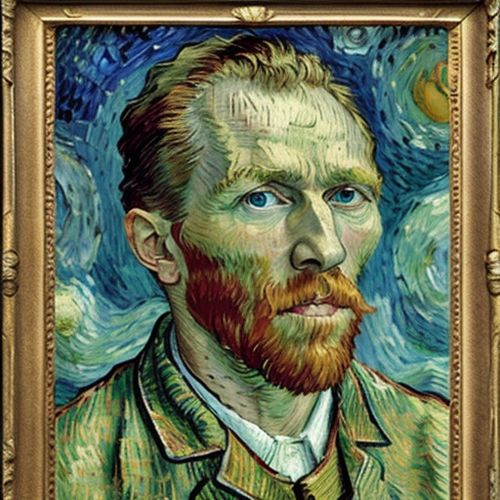
The friendship between Van Gogh and Roulin had a profound impact on art history. The freedom and security this relationship granted Van Gogh allowed him to experiment with portraiture and develop his unique style. His portraits of the Roulin family are characterized by delineated shapes, bold, glowing colors, and thick wavy strokes that make the forms vibrate with life. Van Gogh prioritized an emotional response to his subjects, resolving "not to render what I have before my eyes" but to "express myself forcefully."
In the security of this friendship, Van Gogh overturned the conventions of portrait painting, painting Roulin "as I feel him." The joyful background colors—green, blue, yellow, or red—vary from one family member to another, conveying happiness and affection. Exuberant floral backdrops, reserved for the parents, come later, symbolizing the blooming of their relationship since the earlier, plainer portraits.
A Legacy of Hope and Support
Had Van Gogh not felt Roulin's unwavering support, he may not have survived the series of devastating breakdowns that began in December 1888. With the care of those close to him, Van Gogh lived a further 19 months, producing a staggering 70 paintings in his last 70 days and leaving one of art history's most treasured legacies.
The exhibition "Van Gogh: The Roulin Family Portraits" is a testament to the power of supportive relationships and the reality that sadness and hope can coexist. "I hope being with these works of art and exploring his creative process—and his ways of creating connection—will be a heartwarming story," Hanson says. Far from shying away from the sadness of this period in Van Gogh's life, the exhibition bears witness to the profound impact of friendship and the enduring legacy of art born from it.
By Eric Ward/Mar 27, 2025
By Elizabeth Taylor/Mar 27, 2025
By Emma Thompson/Mar 27, 2025
By Megan Clark/Mar 27, 2025
By Elizabeth Taylor/Mar 27, 2025
By Sarah Davis/Mar 27, 2025
By David Anderson/Mar 27, 2025
By Christopher Harris/Mar 27, 2025
By Emily Johnson/Mar 27, 2025
By Christopher Harris/Mar 27, 2025
By Ryan Martin/Mar 14, 2025
By Christopher Harris/Mar 14, 2025
By William Miller/Mar 14, 2025
By Emily Johnson/Mar 14, 2025
By Amanda Phillips/Mar 14, 2025
By Victoria Gonzalez/Mar 14, 2025