The Enigma of Lady Jane Grey: Unveiling the Mystery of a Tudor Portrait

Mar 14, 2025 By William Miller

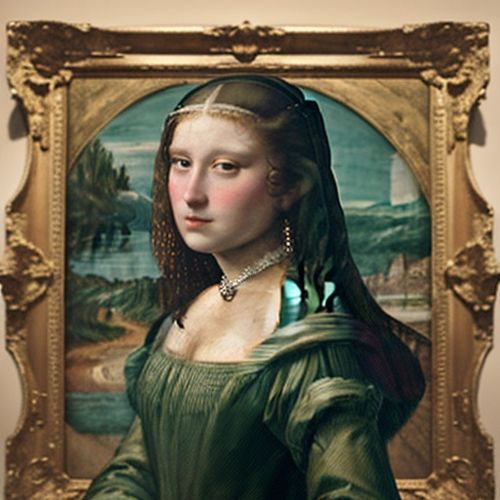
In the annals of history, few figures evoke as much intrigue and tragedy as Lady Jane Grey, the "Nine Days Queen" whose brief reign and untimely execution have captivated historians and storytellers for centuries. Executed at the age of just 17, Lady Jane Grey has long been remembered through posthumous portrayals that depict her as a helpless, blindfolded martyr. However, recent research has brought to light a potential breakthrough: a Tudor-era portrait believed to be the only known image of Lady Jane painted during her lifetime. This discovery, if confirmed, would offer an unprecedented glimpse into the life and appearance of one of history's most enigmatic figures.


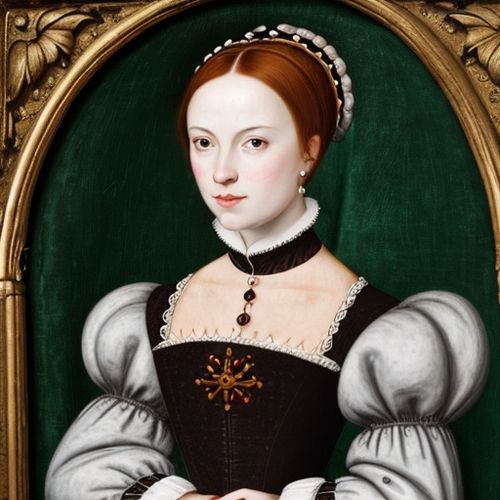
The portrait in question has a storied history of its own. Long believed to be Lady Jane Grey, the attribution was rejected after more than 300 years, leaving its true identity shrouded in mystery. Now, experts from English Heritage, in collaboration with the Courtauld Institute of Art and dendrochronologist Ian Tyers, have uncovered compelling evidence suggesting that this painting may indeed capture the likeness of the teenage queen. The portrait is currently on loan to Wrest Park in Silsoe, Bedfordshire, where it has become the focus of intense scrutiny and fascination.


"Regardless of her identity, the results of our research have been fascinating," said Rachel Turnbull, senior collections conservator at English Heritage. Turnbull and her team employed a range of cutting-edge scientific techniques to uncover the painting's secrets. Infra-red reflectography revealed significant alterations made to the sitter's costume after the portrait was completed, including changes to her sleeves and coif—the linen cap worn over her hair. These modifications suggest that the original portrait may have depicted a more elaborate and regal attire, which was later toned down to reflect Lady Jane's posthumous image as a "subdued, Protestant" martyr.


One of the most striking discoveries was the deliberate defacement of the portrait. The sitter's eyes, mouth, and ears were scratched out, likely as part of an iconoclastic attack motivated by religious or political reasons. This act of vandalism mirrors similar marks found on a National Portrait Gallery image of Lady Jane, suggesting a pattern of deliberate desecration. According to Turnbull, these findings support the theory that the painting was altered to align with the prevailing narrative of Lady Jane as a Protestant martyr.


Dendrochronological analysis, which involves dating the painting's wooden panel through tree-ring patterns, revealed that the Baltic oak boards used for the portrait were likely sourced between 1539 and 1571. This timeline places the painting within Lady Jane's lifetime, lending further credence to its attribution. Additionally, the back of the panel bears a merchant or cargo mark identical to one found on a royal portrait of Edward VI, Lady Jane's predecessor. This connection suggests that the painting may have been commissioned during the tumultuous period of religious upheaval and political intrigue that defined the Tudor era.


Lady Jane Grey's story is one of extraordinary brevity and profound tragedy. Born in Bradgate Park, Leicestershire, around 1537, she was the great-niece of Henry VIII and received an education on par with the king's own daughters. Fluent in Greek, Latin, Hebrew, French, and Italian, Lady Jane was a highly educated and intelligent young woman. Her high-status family positioned her as a pawn in the larger game of Tudor politics, particularly as Protestant King Edward VI sought to prevent his Catholic sister Mary from ascending the throne.


When Edward VI died in 1553, Lady Jane was proclaimed queen by her father-in-law, the Duke of Northumberland. However, her reign lasted a mere nine days, from July 10 to July 19, before she was deposed in favor of Mary I. In the wake of a Protestant uprising against Mary, Lady Jane was executed at the Tower of London in 1554. Her refusal to convert to Catholicism cemented her legacy as a Protestant martyr, and she has since been depicted in countless posthumous portraits as a helpless, blindfolded figure facing the executioner's block.


The most famous portrayal of Lady Jane, "The Execution of Lady Jane Grey" by Paul Delaroche, painted in 1822, captures her as a vulnerable and tragic figure. This image, along with others, has long defined the public's perception of Lady Jane as a victim rather than a strong-willed and intelligent young woman. The newly examined portrait, however, challenges this traditional representation. Historical novelist and historian Philippa Gregory, who viewed the painting at English Heritage's conservation studio, noted that the features are strikingly similar to those in the National Portrait Gallery's depiction of Lady Jane. "This is such an interesting picture posing so many questions," Gregory said. "If this is Jane Grey, it is a valuable addition to the portraiture of this young heroine, as a woman of character—a powerful challenge to the traditional representation of her as a blindfolded victim."


The implications of this discovery extend beyond the realm of art history. If confirmed, the portrait would provide a rare and authentic glimpse into the life of Lady Jane Grey, offering a more nuanced understanding of her identity and the historical context in which she lived. It would also highlight the complex interplay between art, politics, and religion during the Tudor era, a period marked by intense conflict and upheaval.


Moreover, the portrait's history reflects the broader narrative of Lady Jane's life. Acquired by one of Wrest Park's former owners in 1701 as an image of Lady Jane Grey, it remained the defining portrait of the "Nine Days Queen" for over three centuries. However, as historical scrutiny increased, its attribution was eventually rejected, leaving its true identity in doubt. Peter Moore, the curator of Wrest Park, described the painting's return to the estate as "thrilling," noting that the new research provides "tantalising evidence" supporting its connection to Lady Jane.


The ongoing debate surrounding the portrait's authenticity underscores the enduring fascination with Lady Jane Grey. Her brief reign and tragic end have made her a symbol of both resilience and vulnerability, a young woman caught in the crossfire of religious and political tensions. The possibility that this painting captures her true likeness adds a new dimension to her story, inviting us to reconsider the traditional narrative and appreciate her as a complex and multifaceted individual.


In conclusion, the recent research into the Tudor-era portrait believed to depict Lady Jane Grey offers a tantalising glimpse into the life of one of history's most enigmatic figures. While definitive confirmation remains elusive, the evidence uncovered by experts from English Heritage and their collaborators presents a compelling case. The portrait's alterations, dendrochronological dating, and connection to other royal portraits all support the theory that this painting captures the true likeness of the "Nine Days Queen."


As historians and art enthusiasts continue to unravel the mysteries surrounding Lady Jane Grey, this portrait serves as a reminder of the importance of questioning established narratives and seeking new perspectives. Whether or not it is ultimately confirmed as Lady Jane, the painting invites us to reflect on the complexities of her life, the turbulent era in which she lived, and the enduring power of art to shape our understanding of the past.


Recommend Posts
Arts

The Healing Power of Needle Felting: Mandy Smith's Journey and the Celebratory Exhibition

By Eric Ward/Mar 27, 2025

In the heart of the West Midlands, a special exhibition is set to celebrate the diverse and often overlooked world of hobbies. Among the many creative souls participating is Mandy Smith from Tipton, whose passion for needle felting has not only brought her personal joy but also captured the attention of hobby enthusiasts across the country. As part of the "Come As You Really Are" exhibition, Smith's intricate and whimsical creations will be on display, offering a glimpse into the therapeutic and transformative power of this unique craft.
Arts

Somerset's Octagon Theatre: A Long Road to Revival

By Elizabeth Taylor/Mar 27, 2025

In the heart of Yeovil, Somerset, the Octagon Theatre stands as a symbol of the community's cultural aspirations. However, its recent history has been marked by delays and uncertainty. Closed since April 2023 for a much-needed refurbishment, the theatre's reopening has been pushed back multiple times, with the latest estimates suggesting it may remain shuttered until 2027. This prolonged closure has raised questions about the project's management, funding, and the impact on the local community.
Arts

The Art of Detection: How to Spot a Fake Masterpiece

By Emma Thompson/Mar 27, 2025

In an era dominated by digital deceptions and artificial intelligence, it might seem that fraud is a modern invention. However, the recent discovery of an elaborate art forger's workshop in Rome and the contentious debate over the authenticity of a painting in London's National Gallery remind us that art forgery has a long and storied history. From impossible pigments to clumsy brushstrokes, the world of art has always been fraught with duplicity. As more sophisticated tools of analysis are applied to artworks, the integrity of cultural icons is increasingly scrutinized. Here are five simple rules to help you navigate the complex world of art authentication.
Arts

The Quest for Shakespeare: A Window Cleaner's Journey to Authenticate a Priceless Portrait

By Megan Clark/Mar 27, 2025

In the world of art and literature, few mysteries captivate the imagination as much as the true appearance of William Shakespeare. For over a decade, window cleaner Steven Wadlow has been on a relentless quest to prove that he possesses a priceless, authentic portrait of the Bard. His journey, filled with intrigue, scientific analysis, and a touch of obsession, is now the subject of a Netflix documentary, "The Stuff of Dreams."
Arts

Vincent van Gogh and His Unlikely Soulmate: The Story of Joseph Roulin

By Elizabeth Taylor/Mar 27, 2025

In the annals of art history, few relationships have been as profound and supportive as that between Vincent van Gogh and Joseph Roulin. At the most turbulent time of his life, Van Gogh found solace and stability in the friendship of Roulin, a postman in Arles. This unique bond is now being explored in a new exhibition, "Van Gogh: The Roulin Family Portraits," which opens at the Museum of Fine Arts, Boston, on March 30, before moving to the Van Gogh Museum in Amsterdam in October. The exhibition, featuring over 20 paintings by Van Gogh, offers a rare glimpse into the deep friendship that not only sustained the artist but also enriched art history.
Arts

MSCHF: The Art of Provocation and the Power of Mystery

By Sarah Davis/Mar 27, 2025

In the realm of contemporary art and culture, few collectives have garnered as much attention and controversy as MSCHF. Described variously as performers, designers, and even internet trolls, MSCHF prefers the ambiguous title of "artists," a label that encapsulates the multifaceted nature of their work. Since its founding in 2016, this 25-member Brooklyn-based group has consistently pushed the boundaries of art, consumerism, and internet culture with their provocative and often perplexing creations.
Arts

The Call to End the Display and Sale of Human Remains in the UK

By David Anderson/Mar 27, 2025

In the United Kingdom, a growing movement is challenging the long-standing practices of displaying human remains in museums and selling them at auction houses. This movement, spearheaded by the All-Party Parliamentary Group on Afrikan-Reparations (APPG-AR), is calling for significant changes to how human remains are treated and regulated. The APPG-AR, composed of parliamentarians, campaigners, and community members, released a report titled "Laying Ancestors to Rest," which outlines the distress caused to diaspora communities by the retention and display of ancestral remains, many of which were taken during colonial rule.
Arts

The Rediscovery of a Lost Masterpiece: Gustav Klimt's "Prince William Nii Nortey Dowuona"

By Christopher Harris/Mar 27, 2025

In the world of art, few moments are as exhilarating as the rediscovery of a long-lost masterpiece. Such is the case with an early painting by the renowned Austrian painter Gustav Klimt, which has resurfaced after decades of obscurity. The portrait of Prince William Nii Nortey Dowuona, a representative of the Ga people in West Africa (present-day Ghana), has captivated art enthusiasts and historians alike. Painted in 1897, this small yet significant work is now on display at the prestigious TEFAF Maastricht art fair in the Netherlands, with a staggering price tag of €15 million (approximately $16.3 million).
Arts

The Cultural Significance of Long Hair: Irina Werning's "Las Pelilargas"

By Emily Johnson/Mar 27, 2025

Over the past two decades, Argentine photographer Irina Werning has embarked on a remarkable journey across Latin America, documenting a unique and deeply rooted cultural phenomenon. Her project, titled "Las Pelilargas" (The Long-haired Ones), explores the reverence for long hair within the region, capturing the stories and traditions of individuals whose hair serves as a powerful symbol of cultural identity and resistance.
Arts

Decolonising the Past: A Journey Through Bristol's Museum Collection

By Christopher Harris/Mar 27, 2025

In the heart of Bristol, a city steeped in history, a new exhibition is challenging the way we perceive historical artefacts. Titled "Those that do not smile will kill me: Decolonising Jamaican Flora," the exhibition is the brainchild of artist Jessica Ashman, who has been meticulously working with the collections of Bristol Museum & Art Gallery. Her work is not just an artistic display; it is a profound exploration of the stories and histories that have been long ignored or overlooked.
Arts

Athol Fugard: The Fearless Voice Against Apartheid

By Ryan Martin/Mar 14, 2025

The death of Athol Fugard at the age of 92 marks the passing of one of South Africa's most influential and courageous playwrights. Known for his politically charged works that exposed the brutalities of apartheid, Fugard left an indelible mark on both South African and global culture. His plays, which often featured mixed-race casts and addressed the harsh realities of racial segregation, became a beacon of hope and resistance during one of the darkest periods in South Africa's history.
Arts

Banksy's Tribute to Vettriano: Art, Legacy, and the Power of Reimagining

By Christopher Harris/Mar 14, 2025

In the world of contemporary art, few names evoke as much intrigue and admiration as Banksy and Jack Vettriano. Both artists, though from different eras and styles, have left indelible marks on the cultural landscape. Their paths recently intertwined in a poignant and financially significant manner, culminating in the sale of a Banksy reimagining of Vettriano's iconic work, "The Singing Butler," at Sotheby's in London for £4.3 million ($5.4 million). This sale, which took place just days after Vettriano's death, underscores not only the enduring appeal of both artists but also the complex relationship between art, legacy, and reinterpretation.
Arts

The Enigma of Lady Jane Grey: Unveiling the Mystery of a Tudor Portrait

By William Miller/Mar 14, 2025

In the annals of history, few figures evoke as much intrigue and tragedy as Lady Jane Grey, the "Nine Days Queen" whose brief reign and untimely execution have captivated historians and storytellers for centuries. Executed at the age of just 17, Lady Jane Grey has long been remembered through posthumous portrayals that depict her as a helpless, blindfolded martyr. However, recent research has brought to light a potential breakthrough: a Tudor-era portrait believed to be the only known image of Lady Jane painted during her lifetime. This discovery, if confirmed, would offer an unprecedented glimpse into the life and appearance of one of history's most enigmatic figures.
Arts

The Art of Deception: A Forger's Toolkit and How to Outsmart Them

By Emily Johnson/Mar 14, 2025

In a world increasingly dominated by digital deceptions and AI-generated falsehoods, it's easy to assume that the art of forgery is a modern phenomenon. Yet, the recent discovery of an elaborate art forger's workshop in Rome, along with the contentious debate surrounding a supposed masterpiece in London's National Gallery, serves as a stark reminder that the history of fraudulent art is as ancient as it is intricate. From impossible pigments to clumsy brushstrokes and suspicious signatures, the tale of art forgery is written in the very materials and techniques that artists have used for centuries.
Arts

The Intimate World of Danielle McKinney: Painting Solitude and Revolution

By Amanda Phillips/Mar 14, 2025

In the quiet corners of domesticity, Danielle McKinney's ladies find their peace. These women, painted in moments of repose, solitude, and quiet introspection, have become the hallmark of an artist whose work captures the essence of rest and the beauty of being alone with oneself. McKinney's ladies lounge on couches, sleep in beds, play with butterflies, or simply exist in their own private worlds. They are intimate portraits of solitude, painted with a tenderness that invites viewers into their quiet lives. For McKinney, these women are more than just subjects; they are extensions of her own curiosity and desire to explore the human experience in its most unguarded moments.
Arts

Unveiling the Wild Heart of Pompeii: The Discovery of a Rare Megalographyhanalian rituals

By Victoria Gonzalez/Mar 14, 2025

In the shadow of Mount Vesuvius, where time stands still and history whispers through the ruins, Pompeii continues to reveal its secrets. The ancient Roman city, buried in a catastrophic eruption in 79 AD, has long been a treasure trove for archaeologists and historians. Recently, another extraordinary discovery has shed light on the wilder, more uninhibited aspects of Roman life—a rare megalography, or life-sized painting, depicting the procession of Dionysus, the ancient Greek god of wine and revelry.